
Yes — self-adhesive vinyl is waterproof. However, the complete answer is more nuanced than a simple yes. The vinyl film itself repels water effectively. The adhesive layer beneath it is a different matter. Furthermore, the join between the vinyl edge and the surface below is where most water-related failures actually begin.
Understanding what waterproof means for self-adhesive vinyl — and where the limits are — is essential before specifying it for wet environments in South Africa. The Western Cape’s winter rainfall, KwaZulu-Natal’s subtropical humidity, and Gauteng’s heavy summer thunderstorms all create conditions that test vinyl applications in different ways.
The Vinyl Film Is Waterproof — The Edges Are Not
The PVC film used in self-adhesive vinyl does not absorb water. Rain, cleaning water, and moisture run off the surface without penetrating the material. This makes it suitable for outdoor signage, vehicle graphics, window displays, and wet-area applications across South Africa.
However, water finds edges. Wherever the vinyl meets the surface — at corners, joins, and cut edges — there is a potential entry point for moisture. Once water gets underneath the vinyl, it attacks the adhesive bond. Consequently, the vinyl lifts progressively from the entry point outward. This is the most common cause of self-adhesive vinyl failure in South Africa’s wet conditions — not the vinyl face failing, but water undermining the adhesive from the edges.
The fix is straightforward. Seal all edges with a compatible edge sealer or overlaminate that covers the vinyl edge and bonds to the surface below. For outdoor applications in South Africa’s coastal and high-rainfall regions, edge sealing is not optional.
How Different Applications Handle Water in South Africa
Outdoor Signage
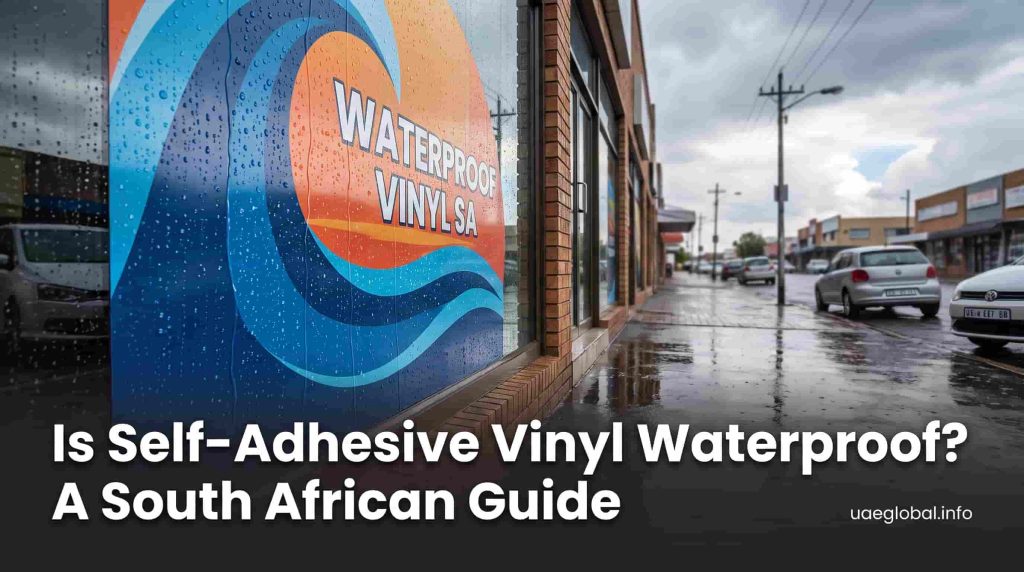
Outdoor self-adhesive vinyl signage in South Africa faces significant water exposure — particularly in Cape Town’s winter months and Durban’s summer storm season. Quality outdoor-rated vinyl with UV-resistant inks handles direct rain and surface cleaning without degradation.
However, the installation surface matters significantly. A vinyl graphic on a smooth, non-porous surface — glass, ACP, or painted metal — with sealed edges performs well in sustained rainfall. The same vinyl applied to a porous or textured surface in a high-rainfall location will show edge lifting much sooner. Therefore, surface preparation and edge sealing are as important as the vinyl specification itself for outdoor applications.
Vehicle Graphics
Vehicle graphics in South Africa face a specific combination of water challenges — high-pressure car wash jets, road spray at speed, and temperature cycling between wet and dry conditions. Furthermore, the curved surfaces of vehicle panels create edge stress that flat surface applications do not experience.
Pressure washing is the primary risk for vehicle graphics. High-pressure jets directed at vinyl edges force water underneath the adhesive at a pressure the bond cannot resist. For vehicle wraps in South Africa, the recommendation is clear — avoid directing high-pressure water at vinyl edges during washing. Use hand washing techniques and low-pressure rinsing instead.
Window Graphics and Interior Displays
Interior self-adhesive vinyl applications — window graphics inside shopping centres, retail displays, and office environments — face minimal direct water exposure. Nevertheless, condensation in coastal South African locations can affect vinyl applied to glass surfaces that experience significant temperature differentials.
On glass surfaces where condensation forms regularly, moisture collects at the vinyl edges over time. Moreover, it gradually compromises the adhesive bond — particularly on removable-grade vinyl where the adhesive is already less aggressive than permanent grade. For interior applications in coastal South African cities, permanent-grade vinyl with sealed edges is the more reliable specification.
Wet Area Applications
Self-adhesive vinyl is used in wet commercial environments across South Africa — kitchen splash-backs, bathroom feature walls, and wet-area signage. In these applications, the vinyl face handles the water exposure well. However, the installation needs specific attention to ensure waterproofing is complete.
For wet area self-adhesive vinyl installations, every edge must be sealed. Additionally, the surface must be completely dry and free of any silicone or cleaning product residue before application. Silicone-contaminated surfaces — common in bathroom environments — prevent adhesive bonding almost entirely. Consequently, decontamination of silicone from any bathroom surface is essential before applying self-adhesive vinyl.
What Affects Water Resistance in South Africa’s Climate
Grade of Vinyl
Not all self-adhesive vinyl is formulated the same way. Quality outdoor-rated vinyl uses UV-stabilised PVC with a denser formulation that resists moisture absorption better than economy grades. Economy grades may appear identical on installation but perform significantly worse in sustained wet conditions.
For outdoor and wet-area applications in South Africa, specify outdoor-rated vinyl from a reputable supplier rather than the cheapest available option. The cost difference is modest — the performance difference in KwaZulu-Natal’s humidity or the Cape’s winter rain is significant.
Adhesive Type
Permanent adhesive performs better in wet conditions than removable adhesive. The stronger initial bond of permanent adhesive resists water ingress at edges more effectively. Furthermore, permanent adhesive maintains its bond strength across the thermal cycling that South Africa’s climate creates — wet winters followed by hot dry summers in the Cape, and sustained humidity in coastal KwaZulu-Natal.
Removable adhesive is appropriate for dry indoor applications where clean removal is needed. However, it is not the correct specification for any application with significant water exposure in South Africa.
Lamination
An overlaminate applied to self-adhesive vinyl adds a significant layer of protection in wet conditions. Quality outdoor laminate covers the printed surface and, when applied over the vinyl edges, seals them against water ingress. Moreover, lamination adds UV resistance and scratch protection simultaneously.
For any outdoor or wet-area vinyl application in South Africa, lamination should be treated as part of the standard specification — not an optional upgrade. Matte lamination is generally more practical than gloss for outdoor applications because it reduces glare in direct sunlight.
South Africa’s Regions and Water Exposure Considerations
Western Cape — Cape Town and the surrounding wine regions experience significant winter rainfall. Self-adhesive vinyl in the Western Cape faces months of sustained wet conditions from June to August. Outdoor vinyl in this region requires outdoor-rated specification with sealed edges and lamination as standard. Furthermore, the temperature variation between warm dry summers and cool wet winters creates thermal cycling stress that affects adhesive bonds over time.
KwaZulu-Natal — Durban and the KwaZulu-Natal coast have year-round humidity combined with heavy summer rainfall. The combination of heat, humidity, and regular rainfall creates one of the most demanding environments for self-adhesive vinyl in South Africa. Permanent adhesive, outdoor-rated vinyl, and thorough edge sealing are all essential for outdoor applications in this region. Additionally, salt air in coastal locations accelerates adhesive degradation on any vinyl not rated for marine exposure.
Gauteng — Johannesburg and Pretoria experience dry winters but extremely heavy summer thunderstorms. The sudden transition from dry conditions to heavy rain — often accompanied by hail — creates specific stress for vinyl applications. However, the drier overall climate of the highveld means that winter conditions are generally less demanding than coastal regions. Correctly specified outdoor vinyl performs well in Gauteng’s climate throughout the year.
Frequently Asked Questions
Is self-adhesive vinyl waterproof in South Africa?
Yes — the vinyl film itself is waterproof. However, water can penetrate at edges if they are not sealed correctly. Seal all edges with a compatible edge sealer, use outdoor-rated vinyl for exterior applications, and apply an overlaminate for maximum water resistance across South Africa’s varied climate conditions.
Can self-adhesive vinyl be used outdoors in the Western Cape’s rainy winter?
Yes — with the correct specification. Use outdoor-rated UV-stabilised vinyl with permanent adhesive, seal all edges, and apply an outdoor overlaminate. Properly specified outdoor vinyl handles the Western Cape’s winter rainfall without significant degradation.
Does water damage self-adhesive vinyl on vehicles in South Africa?
Direct water does not damage quality vinyl. However, high-pressure car wash jets directed at vinyl edges force water underneath the adhesive and cause lifting. Hand washing with low-pressure rinsing is recommended for vehicle graphics across South Africa.
What is the best self-adhesive vinyl for wet areas in South Africa?
Permanent adhesive outdoor-rated vinyl with an overlaminate and fully sealed edges. For wet room applications — bathrooms and kitchens — ensure the surface is completely free of silicone contamination before application, as silicone prevents adhesive bonding entirely.