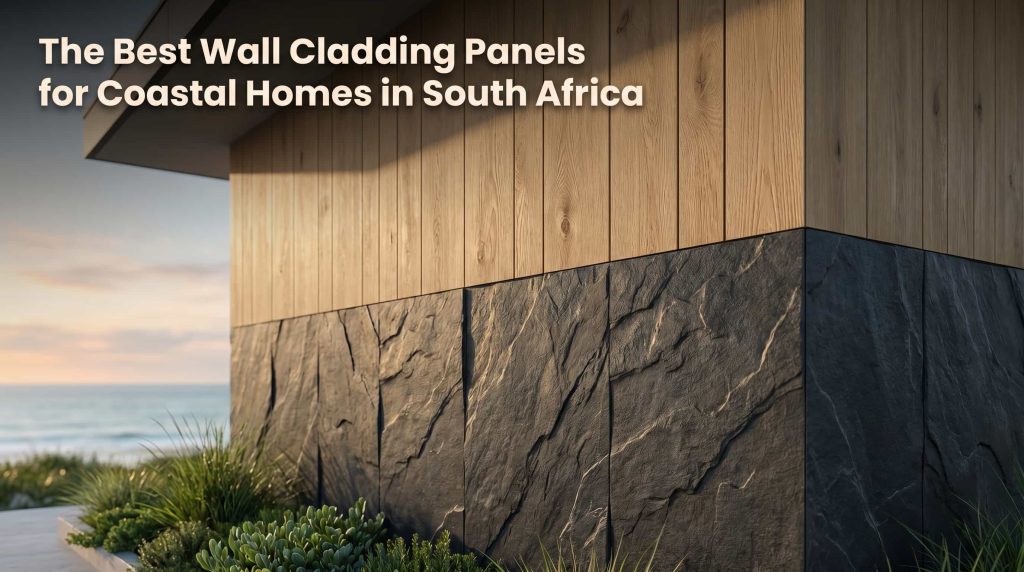

Living near the coast in South Africa has its rewards — stunning ocean views, fresh sea breezes, and that unbeatable lifestyle. But your home’s exterior pays a price. Salt air, persistent humidity, intense UV exposure, and wind-driven rain create one of the harshest environments any building material can face.
Choosing the wrong exterior cladding near the coast means warping, rusting, fading, and expensive replacements within just a few years. The right wall cladding panels, on the other hand, can protect your home beautifully for decades with minimal upkeep.
Here’s a straight-talking guide to the best options available for South African coastal homeowners — from Durban’s subtropical humidity to Cape Town’s wet, windy winters.
Why Coastal Conditions Demand the Right Wall Cladding Panels
Standard cladding materials that perform well inland can deteriorate rapidly near the ocean. The combination of salt-laden air, moisture, and prolonged sun exposure creates conditions that aggressively attack surfaces, fixings, and seals.
Here’s what happens when the wrong material is used:
- Salt air corrodes metal fixings and untreated surfaces, leading to rust stains and structural weakening
- Moisture infiltration causes swelling, cracking, and mould — particularly in untreated timber and low-grade materials
- UV degradation fades colours and makes surfaces brittle over time
- Wind-driven rain tests every joint, seal, and fixing point relentlessly
Getting the material selection right from the start is the most cost-effective decision a coastal homeowner can make.
Top Wall Cladding Panel Options for South African Coastal Homes
1. Fibre Cement Cladding Panels
Fibre cement is one of the most trusted materials for coastal exteriors across South Africa. Made from cement, sand, and cellulose fibres, it resists moisture, salt air, insects, and fire — ticking every box for demanding seaside conditions.
Why it works:
- Completely resistant to rot, rust, and swelling
- UV-stable when finished with quality exterior paint
- Low maintenance — typically needs repainting every 10–15 years
- Available in timber-look, smooth, and textured profiles
Fibre cement wall cladding is a popular choice in coastal towns like Durban, Knysna, Hermanus, and along Cape Town’s Atlantic Seaboard — and for good reason. It holds up against South Africa’s varied coastal climates without constant attention.
2. uPVC Cladding
Unplasticised PVC cladding is virtually impervious to moisture and salt air. It won’t corrode, rot, or need painting — making it one of the most practical low-maintenance exterior cladding options for beachside properties.
Key benefits:
- 100% waterproof — no absorption, no swelling
- Salt air has zero effect on the surface or structure
- Lightweight, reducing structural load and simplifying installation
- Available in woodgrain, smooth, and ribbed finishes
One thing to account for in South Africa’s warmer coastal zones: uPVC expands and contracts with temperature changes, so correct installation with expansion gaps is essential.
3. Composite Wood Cladding
If you love the warmth and character of timber but live near the sea, composite cladding is the smart upgrade. It combines wood fibres with polymer binders to produce a panel that looks like natural timber but performs far better in high-moisture, high-UV environments.
What makes it stand out:
- Resists warping, splitting, and swelling — issues that plague real timber near the coast
- Retains a natural aesthetic that suits coastal architectural styles
- Most quality composites carry 10–25 year warranties
- Available in earthy, neutral tones that age gracefully
For homeowners in Umhlanga, Bloubergstrand, or Ballito who want that relaxed, organic coastal look without the maintenance headache, composite panels are worth serious consideration.
4. Aluminium Composite Panel (ACP)
Aluminium Composite Panels — two aluminium skins bonded to a solid core — are widely used in commercial coastal buildings and are increasingly popular in high-end residential projects. When finished with a PVDF (polyvinylidene fluoride) coating, ACP delivers exceptional resistance to UV and salt air degradation.
Why architects specify it:
- PVDF-coated surfaces resist chalking and fading for 20+ years
- Aluminium skin is far more corrosion-resistant than standard steel
- Lightweight yet rigid — handles South Africa’s coastal wind loads well
- Clean, contemporary aesthetic ideal for modern coastal homes
Fixings should always be marine-grade stainless steel to prevent rust bleed that can stain the panel surface over time.
5. Stone-Look Cladding Panels
Natural stone has protected coastal structures for centuries, and modern stone-effect porcelain and ceramic panels deliver the same visual impact at a fraction of the weight and cost. Non-porous by nature, they repel moisture completely and are essentially impervious to salt air.
Standout qualities:
- Extremely durable with minimal maintenance required
- Non-porous surface repels water and resists mould
- Adds significant kerb appeal and property value
- Popular in premium coastal developments across Cape Town and Durban’s North Coast
What to Avoid Near the Coast
Some materials are simply not suited to marine environments, regardless of how well they perform inland:
- Untreated or poorly sealed timber — absorbs moisture, warps, and rots fast near the sea
- Standard galvanised steel — the zinc coating breaks down in salt air quicker than most expect
- Low-grade vinyl — cheaper formulations discolour and become brittle under intense UV
- Unsealed brick veneer — traps moisture and develops efflorescence and mould over time
Investing in the right material upfront will almost always cost less than replacing a failing system two or three years later.
Choosing the Right Exterior Wall Cladding: Key Considerations
Distance from the ocean — Properties within 500 metres of the shoreline face the highest salt load and need the most marine-grade materials.
Local climate — Cape Town’s cool, wet winters and KwaZulu-Natal’s hot, humid summers call for different performance priorities. Match the material to your specific location.
Maintenance commitment — Some materials like timber need regular recoating. Others like uPVC and composite are largely maintenance-free. Choose based on what you’ll realistically keep up with.
Architectural style — Modern composite, ACP, and fibre cement systems now come in finishes that suit everything from rustic beach cottages to sleek contemporary homes.
Final Thoughts
The South African coastline is beautiful — but it’s demanding on exterior surfaces. The best wall cladding panels for coastal homes are those engineered specifically to handle salt air, moisture, and UV exposure without constant intervention.
Fibre cement, composite, uPVC, and PVDF-coated aluminium panels consistently lead the field. Stone-look cladding adds a premium option for those after a refined, high-end finish. Whichever direction you go, choosing quality exterior wall cladding now is one of the smartest long-term investments you can make in a coastal property.
What is the most durable wall cladding panel for coastal homes in South Africa?
Fibre cement and PVDF-coated aluminium composite panels offer the longest lifespan in coastal environments — often 20–30 years with proper installation.
Is composite cladding worth it for beachfront homes?
Yes. Composite panels outperform natural timber in coastal conditions by resisting moisture, UV, and salt air — while still delivering a natural, warm aesthetic.
How often should coastal wall cladding be maintained?
Most coastal cladding benefits from washing every 6–12 months to remove salt deposits, along with regular checks on joints and sealants.


