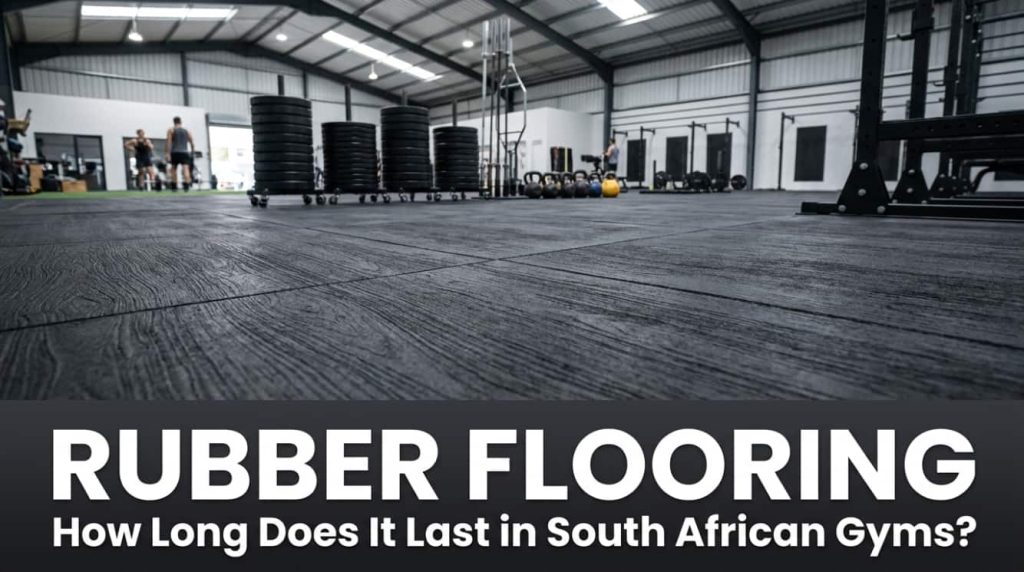

Specifically, between 5 and 20 years — that is the honest range. The variation is not random. It reflects real differences in material type, application, and maintenance. Correct specification for the environment is the deciding factor.
A recycled rubber tile in a heavy Olympic lifting zone compresses under repeated barbell drops. It loses shock absorption within 5 to 8 years. A vulcanised rubber floor in the same position lasts 15 to 20 years. Moreover, a standard rubber roll in a low-traffic aerobics studio lasts longer than either. However, the material is the same broad category. The outcomes are completely different because the specification decisions were different.
Understanding what determines service life helps gyms and fitout managers specify correctly at the outset. It avoids replacing floors that failed before they should have.
What Determines How Long Rubber Flooring Lasts?
Rubber Type and Construction
Specifically, the construction of the rubber material is the primary determinant of service life. Three main types are in use across South Africa’s gym and sports flooring market — and each performs differently under sustained load.
Vulcanised rubber uses a heat-curing process that cross-links the polymer chains — producing a denser, harder-wearing surface than compressed alternatives. Consequently, vulcanised rubber is the correct specification for professional training facilities, high-volume commercial gyms, and 24-hour fitness centres where the floor faces maximum sustained use. Service life in these environments is 15 to 20 years with correct maintenance.
Standard compressed rubber tiles are the most common format in South Africa’s general commercial gym market. Correctly specified for the application — 20mm to 30mm for free weight areas, thicker for Olympic lifting platforms — compressed rubber tiles last 10 to 15 years in medium-use commercial environments. Under-specified thickness or excessive load reduces this significantly.
Recycled rubber uses granulated reclaimed rubber bonded with a polyurethane binder. Consequently, it is the most cost-effective option and performs adequately in light to medium applications. However, in high-impact environments — Olympic lifting platforms, heavy sled push lanes — the granulated construction compresses under sustained load and loses shock absorption properties within 5 to 8 years. The correct environment for recycled rubber is light fitness areas, change rooms, and budget community facilities — not high-impact sports flooring positions.
Application and Load Type
Furthermore, the same rubber material lasts different lengths of time in different positions within the same facility. Moreover, this is the specification variable most commonly overlooked when gyms are fitted out.
Cardio and aerobics zones — light mechanical load from equipment feet and foot traffic. Standard rubber roll at 8mm to 10mm lasts 10 to 15 years in these positions.
Free weight areas — moderate impact from dumbbells and kettlebells dropped to the floor. Compressed rubber tiles at 20mm to 30mm last 10 to 15 years when correctly specified for the impact range.
Olympic lifting platforms — repeated drops of loaded barbells from overhead positions. This is the highest-impact position in any gym environment. Specifically, rubber tiles at 40mm to 50mm are the correct specification here. Under-specified thickness in this position — say 20mm compressed rubber where 50mm is needed — fails within 2 to 3 years as the material bottoms out under repeated impact and transfers load directly to the concrete subfloor.
Sports courts — sports flooring applications — indoor sports courts with basketball, volleyball, or multi-use activity surfaces have different requirements from gym flooring. Furthermore, certified sports flooring in South Africa that needs DIN 18032-2 certification for shock absorption must be correctly specified and tested against that standard. Certified sports flooring in cushioned vinyl or specialist rubber lasts 10 to 15 years with correct maintenance in school and commercial sports hall environments.
Maintenance Regime
Rubber flooring is low maintenance — but not zero maintenance. Moreover, the maintenance practices applied throughout the floor’s service life directly affect how long it remains in serviceable condition.
Cleaning products are the most common cause of accelerated degradation in South Africa’s commercial gym market. Solvent-based cleaners attack the polyurethane binder in recycled rubber and degrade the surface of vulcanised rubber over time. The correct cleaning product for most rubber flooring is a neutral-pH cleaner diluted in water — not a strong disinfectant or solvent-based floor cleaner applied at full concentration.
UV exposure affects rubber flooring in outdoor positions or any gym with sustained direct sunlight through glazing. However, standard indoor rubber flooring is not UV-rated. Outdoor positions require UV-stabilised rubber compounds. Furthermore, sustained UV exposure on unprotected rubber causes surface oxidation — the floor becomes brittle, loses flexibility, and cracks under load significantly faster than its intended service life.
Abrasive contamination — grit, sand, and particulate tracked in from outside act as fine abrasives on the rubber surface under foot traffic. Consequently, entrance matting at all access points is the most cost-effective measure for extending service life in South African gyms. It captures the abrasive material before it reaches the main floor surface.
Rubber Flooring Service Life by Application
| Application | Correct type | Thickness | Expected service life |
|---|---|---|---|
| Cardio and aerobics zone | Rubber roll | 8mm to 10mm | 10 to 15 years |
| Free weight area | Compressed rubber tiles | 20mm to 30mm | 10 to 15 years |
| Olympic lifting platform | Compressed rubber tiles | 40mm to 50mm | 10 to 15 years |
| High-volume commercial gym | Vulcanised rubber | 10mm to 15mm | 15 to 20 years |
| School sports hall | Sports flooring — DIN rated | 8mm to 12mm | 10 to 15 years |
| Light fitness and community use | Recycled rubber tiles | 15mm to 20mm | 5 to 8 years |
What Cuts Rubber Flooring Lifespan Short in South Africa?
Under-specified thickness for the impact load — the most common cause of early failure in South African gym environments. Olympic lifting loads on 20mm tiles. Free weight drops on 10mm roll flooring. However, the floor looks correct on installation and fails under conditions it was never rated for.
Wrong rubber type for the application — recycled rubber in high-impact positions. Nevertheless, the cost saving at specification stage is recovered in early replacement cost.
Incorrect cleaning products — solvent-based cleaners used at high concentration degrade rubber binders and surfaces. Therefore, use neutral-pH cleaners only.
No entrance matting — grit abrasion from foot traffic is the consistent low-level threat to rubber floor surfaces. Entrance matting eliminates most of it at negligible cost.
Outdoor specification without UV rating — standard indoor rubber in outdoor positions degrades through UV oxidation within 2 to 4 years regardless of the thickness or construction type.