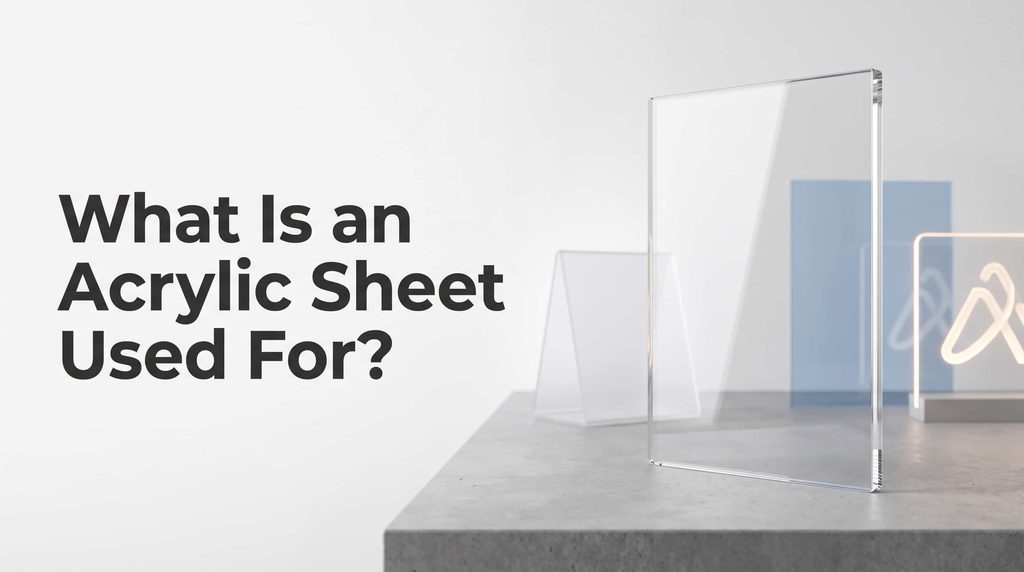
An acrylic sheet is a lightweight, durable plastic material often used as an alternative to glass. It is also known as PMMA, or polymethyl methacrylate, and is valued for its clarity, smooth finish, weather resistance, and ease of fabrication.
Acrylic sheets are available in clear, coloured, frosted, mirrored, and textured finishes, making them suitable for both practical and decorative applications.
Common Uses of Acrylic Sheets
1. Signage and Displays
Acrylic sheets are widely used for business signs, reception signs, illuminated signage, and promotional displays. Clear and coloured acrylic can create a clean, modern appearance, while its smooth surface is suitable for printing, engraving, and lettering.
2. Retail Displays
Retail stores use acrylic for product stands, shelves, display cases, brochure holders, and point-of-sale displays. Its transparency allows products to remain visible while giving the display a professional finish.
3. Interior Decoration
Acrylic sheets can be used for feature walls, decorative panels, partitions, furniture details, and wall-mounted designs. Coloured, frosted, or textured acrylic can add visual interest to homes, offices, hotels, and commercial interiors.
4. Protective Screens and Barriers
Acrylic is commonly used for protective screens, counter shields, reception barriers, and workspace dividers. It provides visibility while creating a physical separation between people or areas.
However, the appropriate thickness and specification should be selected according to the intended application.
5. Lighting Applications
Acrylic sheets are often used in lightboxes, illuminated signs, lampshades, lighting diffusers, and decorative lighting features. Opal or translucent acrylic can help distribute light more evenly.
6. Furniture and Fabrication
Acrylic can be used in furniture components such as tabletops, shelves, cabinet doors, side panels, and decorative inserts. It can be cut, drilled, polished, bent, and fabricated into custom shapes.
7. Glazing and Windows
Clear acrylic sheets can be used for certain windows, indoor glazing, picture frames, skylight features, and viewing panels. They are lighter than glass and offer good impact resistance, although they can scratch more easily than glass.
8. Arts, Crafts, and Creative Projects
Acrylic sheets are also popular for signage prototypes, awards, photo frames, model-making, artwork, laser-cut designs, and custom promotional products.
Benefits of Acrylic Sheets
Acrylic sheets offer several practical advantages:
- Lightweight compared with glass
- Good optical clarity
- Available in many colours and finishes
- Easy to cut, drill, and shape
- Suitable for printing and engraving
- Weather-resistant in suitable grades
- Smooth and attractive surface
- Useful for both functional and decorative applications
What Should You Consider Before Choosing Acrylic?
Before selecting an acrylic sheet, consider:
- Required thickness
- Clear, coloured, frosted, or mirrored finish
- Indoor or outdoor use
- Exposure to sunlight and weather
- Impact and strength requirements
- Scratch resistance
- Cutting or fabrication method
- Fire-performance requirements, where applicable
Acrylic is not suitable for every environment. It may scratch more easily than glass and can soften or deform under excessive heat, so the material should be selected according to the project requirements.
Final Thoughts
Acrylic sheets are used in signage, retail displays, interior decoration, protective screens, lighting, furniture, glazing, and creative fabrication. Their combination of clarity, lightweight construction, and design flexibility makes them a popular material for many residential and commercial projects.
Choosing the correct type, thickness, and finish will help ensure that the acrylic sheet looks good and performs effectively in its intended application.